Honda Wheel Alignment Service in North Charleston, SC
Catch Alignment Trouble Before It Turns Expensive
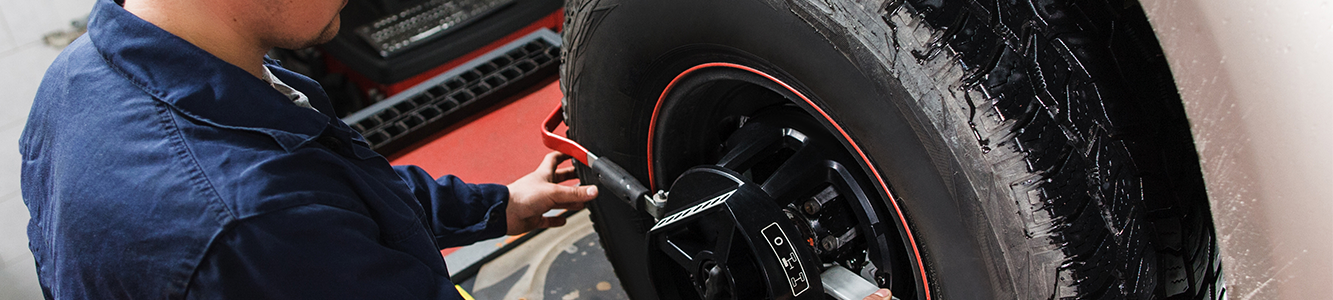
A vehicle that drifts toward the shoulder when you relax your grip, or a steering wheel that sits off center on a straight road, means the wheels are no longer pointing where they should. Our technicians at Stokes Honda North in North Charleston, SC align all makes and models, from a city runabout to a crew-cab truck. Before any adjustment, the vehicle is road tested and its steering and suspension joints are checked, because a worn part will not hold an alignment. The angles are then measured at all four wheels and compared with the factory specifications for your vehicle. You get a before and after report of the measurements and a clear explanation of what was out and why.
The Parts Behind Healthy Alignment Performance
Alignment describes the angles at which each wheel meets the road, set so the tires roll straight, wear evenly and keep the steering stable. The angles that matter most are toe, which is whether the fronts of the tires point toward or away from each other, camber, which is the inward or outward tilt of the tire seen from the front, and caster, which is the forward or rearward tilt of the steering axis seen from the side.
Caster is what makes the steering wheel return to center after a turn, much like the front wheel of a shopping cart trails behind its pivot. When caster or camber differs from one side to the other, the vehicle tends to drift toward the side with less caster or more outward camber.
- Toe has the largest effect on tire wear, because wheels that point even slightly inward or outward are dragged sideways as they roll.
- Thrust angle compares the direction the rear wheels point with the centerline of the vehicle, and when it is off the vehicle travels slightly crabwise down the road.
- On many cars toe is the main adjustable angle, and camber or caster can only be corrected with adjustable parts or by replacing a bent component.
- Tie rods connect the steering rack to each front wheel, and their threaded ends are what the technician turns to set front toe.
- A steering angle sensor tells the stability control system which way the wheel is pointed, and on many vehicles it is recentered after an alignment so the system reads straight ahead correctly.
A four-wheel alignment measures and, where adjustable, sets the angles at both axles, and the front is then aligned to the line the rear wheels actually travel. That sequence matters because a rear axle that pushes slightly sideways can leave the steering wheel crooked even when the front angles look perfect on their own.
A common myth is that an alignment is only needed when the vehicle pulls. Toe can be far enough out to chew through the tread while the vehicle still tracks straight, because the two front wheels are fighting each other equally. By the time the wear is visible, the edge of the tire has already lost tread it cannot get back.
Signs It Is Time to Check Your Wheel Alignment
The most common cause of a sudden change is an impact. Clipping a curb while parking, dropping a wheel into a deep pothole or striking debris on the highway can bend a tie rod, shift a subframe or push a control arm out of position in an instant.
Gradual changes come from wear. Rubber bushings in the control arms soften, ball joints and tie rod ends develop play, and springs that sag lower the ride height, which changes camber and toe along with it. Lifting or lowering a vehicle moves the angles as well, so any suspension modification calls for a fresh alignment.
- The vehicle drifts to one side on a straight, level road and you have to hold steady pressure on the steering wheel to keep it in the lane.
- The steering wheel is tilted to one side when the vehicle is going straight, often right after a curb strike or new suspension work.
- The inside or outside edge of a front tire is wearing much faster than the rest of the tread, sometimes with a feathered feel when you run a hand across it.
- The steering feels loose or wanders on the highway, needing small constant corrections, or it does not return to center smoothly after a turn.
- Tires squeal on gentle turns at low speed, such as in a parking garage, even though nothing else seems wrong.
A pull does not always come from alignment. A tire with an internal construction flaw, a brake that does not fully release or a road surface that slopes toward the shoulder for drainage can each create drift that feels the same from behind the wheel. Separating them takes a road test, a look at the brakes and a careful read of the angles.
Early alignment protects the tires you already own. Edge wear cannot be reversed, so weeks of driving out of alignment can permanently shorten a tire's life, and a pull makes a long drive more tiring than it should be. Having the angles checked right after an impact, or as soon as the steering feels different, keeps the correction simple.
Repairs and Maintenance for Your Wheel Alignment
Three alignment services address the most common steering complaints, from a simple drift to camera aiming after the angles change.
Four-Wheel Angle Measurement and Adjustment
Targets or sensors are mounted on each wheel, and the alignment system measures toe, camber, caster and thrust angle against the specifications for your vehicle. The steering wheel is locked level and the technician adjusts each angle that has a factory provision for it, starting at the rear axle. Seized adjusters or worn parts that prevent a correct setting are reported to you before any extra work is done. You receive a report showing every reading before and after the adjustment.
Curb and Pothole Impact Check
After a hard hit, the first question is whether anything is bent. The technician inspects the wheel, tie rods, control arms and steering knuckle for damage and measures the angles to see which corner moved. A reading that cannot be brought into range with the normal adjusters usually points to a bent part, which is identified and quoted separately. Wheels are also checked for bends or cracks that could cause a slow leak or a shake.
Driver-Assist Camera and Radar Aiming
Lane keeping and automatic emergency braking rely on a forward camera, and often a radar sensor, that must point along the vehicle's actual direction of travel. When an alignment changes the thrust angle, many manufacturers call for the camera to be aimed again so the system reads lane lines and other vehicles correctly. Aiming uses a target placed at a measured position in front of the vehicle and a scan tool to run the calibration. Your advisor will tell you whether your model requires it after an alignment and confirm the result before you leave.
Measuring Before We Adjust Anything
The visit starts with a road test to feel the pull, note the steering wheel position and see how the vehicle settles after a bump. The technician then drives onto the alignment rack and checks tire pressures and ride height, since both affect the readings.
Picture a driver who brings in a crossover that drifts right on I-526 and asks for a quick alignment to fix it. The angles turn out to be close to specification, and adjusting them would have changed little. When the technician swaps the front tires side to side, the pull moves to the left, revealing a tire with an internal belt problem that no alignment could correct.
- A road test notes which way the vehicle pulls, how far the steering wheel sits off center and whether the complaint changes with speed or braking.
- Tie rod ends, ball joints and control arm bushings are checked for play, because a loose joint lets the angles shift as soon as the vehicle hits a bump.
- Ride height and tire condition are recorded, since a sagging corner or mismatched tires can skew the readings.
- An estimate covering any adjustment or part is reviewed with you, and the work waits for your approval.
With the angles set, the steering angle sensor is recentered where the vehicle calls for it and the technician takes a second road test. The steering wheel should sit level, the vehicle should track straight on a level road, and any camera or radar aiming is confirmed on vehicles that need it.
All makes and models are welcome on our alignment rack. A same-day alignment is common when the schedule and parts allow it, and a bent part that needs ordering is the usual reason for a longer stay.
Alignment Care From Stokes Honda North in North Charleston
Factory-trained technicians at Stokes Honda North align the Pilot, Passport and Ridgeline as carefully as the Civic, Accord, HR-V, CR-V and Odyssey, using the specifications Honda publishes for each model and trim. Honda diagnostic software is used to reset the steering angle sensor's center point after an alignment where the service information calls for it, so stability control and steering assist read straight ahead correctly. Alignment specifications and adjustment points are confirmed against your VIN, which matters because wheel size and trim can change the targets.
Many Hondas are equipped with Honda Sensing, which uses a camera at the top of the windshield and, on many models, a front radar unit. Honda's service information lists when those sensors must be aimed, and your advisor can tell you whether your model and the work performed call for it.
- Bent tie rod ends or control arms can be replaced with genuine Honda parts made for that chassis.
- Before and after readings are saved with the repair order, which makes a slowly wearing part easier to spot later.
- If the angles check out and the pull lies elsewhere, the findings point to that cause.
Find Stokes Honda North in North Charleston, SC
Our Service Area Around North Charleston
The busy turning lanes along Ashley Phosphate Road and the long, fast stretches of I-526 show an alignment problem in different ways: a crooked steering wheel in town and a tiring pull at highway speed. Drivers who notice either one bring their vehicles to Stokes Honda North for a measurement before the tires pay the price.
- Ladson, SC
- Hanahan, SC
- Goose Creek, SC
- Summerville, SC
- Charleston, SC
- Daniel Island, SC
- Mount Pleasant, SC
- West Ashley, SC
Bring us the pull or the crooked wheel. Our team will measure every angle and explain what it finds.
The Questions Our Service Desk Hears About Alignment Care
Answers to the wheel alignment questions we field most at our service desk.
Q: Do I need an alignment after getting new tires?
Q: Why would a steering wheel sit crooked even after an alignment?
Q: Can hitting a curb knock my wheels out of alignment?
Q: Will an alignment fix a vibration?
Q: Do you align vehicles from brands you do not sell?
A quick call to the service desk describing the pull, the crooked wheel or the wandering feel lets an advisor book the measurement your vehicle needs.
Mention any recent curb strike or suspension work, since it often explains the change.
Put Wheel Alignment Service on the Calendar
Misalignment works quietly against your tires each time the vehicle moves. The worn edge it leaves behind is permanent, and a pull you have learned to steer around adds fatigue on longer drives. A measurement soon after the steering changes keeps the fix to an adjustment instead of new tires plus an adjustment.
When a worn or bent part has to be replaced before the vehicle can be aligned, your advisor explains why and prices it on its own line. Nothing is adjusted or replaced until you agree.
Set up a time online or phone Stokes Honda North to get the angles checked. A road test and a measurement answer the question quickly.
Service Specials



Wild Card Savings

Four Wheel Alignment
Alignments are crucial to ensuring that you get the longest life out of your tires.
10% Off Brake Job

$25 Off Any Flush
Brake Flush Coolant Flush Transmission Flush Power steering flush Rear diff Fuel Injection Flush