Honda AC Repair Service in North Charleston, SC
Clear Answers and Careful AC Repair
A windshield that stays clouded while the defroster roars is more than an annoyance, because you cannot avoid what you cannot see. The climate team at Stokes Honda North in North Charleston, SC treats that blurry glass as an air conditioning question first, since the same system that cools the cabin also wrings moisture out of the air. We work on air conditioning for all makes and models, from commuter sedans to full-size pickups. Each visit opens with a diagnosis that follows the air from the blower fan through the cooling loop and out the defrost ducts. Once the weak link is identified and explained, you decide what gets repaired.
Getting to Know Your Air Conditioning
Think of the air conditioner as a moisture trap as much as a cooler. When cabin air passes over the cold fins of the evaporator, the water vapor in it condenses into droplets, the same way a chilled glass sweats on a porch table. That water drips away beneath the car, and the air continuing toward the vents leaves noticeably drier than it arrived.
Dry air is what clears a windshield quickly. When you select the defrost setting, most modern vehicles switch the compressor on automatically, even with the temperature dial turned toward warm, because the heater core can then reheat air that has already been dried. The result is warm, dry airflow aimed at the glass, which pulls fog off the inside surface far faster than heat by itself could manage.
- The compressor is the pump of the loop, and in defrost mode it may run quietly in the background even when you never press the AC button.
- The condenser sits ahead of the radiator at the nose of the vehicle, where it releases cabin heat into the outside air passing through its thin fins.
- A blower motor pushes air across the evaporator, and its speed is set by a resistor or a small control module tucked near the fan housing.
- Mode doors steer that air toward the windshield, the dash vents or the floor, so a door that stops moving can starve the glass of airflow.
- A cabin air filter sits upstream of the blower, and a clogged one can cut the volume reaching the defrost ducts even when the fan sounds strong.
Visibility makes this system a safety item, not only a comfort feature. Fog tends to form when the glass is cooler than the air inside the car, which happens on damp mornings, after a rain shower or simply when several passengers climb in wearing wet jackets. A healthy system clears that film within moments, while a weak one leaves the driver wiping the glass by hand at a stoplight.
A popular belief holds that air conditioning matters only in summer and can be ignored the rest of the year. In reality the compressor works year-round whenever defrost is selected, and running it regularly keeps its internal seals coated with oil so they stay supple. A system left idle for months can develop leaks at dried-out seals, which is why a failure often appears the first foggy morning after a long break.
What Changes as AC Wear Builds Up
Glass that fogs and refuses to clear is often the first sign of trouble, sometimes before the driver ever notices warmer air from the dash vents. That pattern usually means the compressor is not engaging, so the air reaching the windshield is warm but still loaded with moisture.
Debris is a frequent cause of sudden refrigerant loss. Gravel, tire fragments and loose cargo bouncing off trucks ahead can strike the condenser through the grille openings, bending fins or piercing the thin tubes behind them. A small puncture may empty the system within days, while bent fins simply block airflow and make the whole loop work harder.
- A defroster that blows plenty of air yet leaves a stubborn haze on the glass suggests the air is not being dried before it reaches the windshield.
- Airflow that stays feeble on every fan setting points toward a blocked cabin filter, a failing blower motor or debris lodged in the fan cage.
- A blower that runs only on its highest setting is a textbook symptom of a burned-out resistor or a faulty fan control module.
- A whistling or fluttering sound from behind the glove box when the fan runs can mean leaves or a stray wrapper have been drawn into the housing.
- A greasy film coating the inside of the windshield that returns soon after cleaning can come from a coolant leak at the heater core rather than the AC itself.
Fog is not always an AC fault. A door seal that lets in rain, a clogged cowl drain at the base of the windshield or a damp carpet can load the cabin with more moisture than any system can remove. Technicians check for those water sources along with refrigerant pressures, so a repair targets the actual cause.
Waiting has a real cost here because the problem tends to surface at the worst moment, often on a dark, rainy commute with the glass closing in. A condenser with a slow leak also lets moisture into the loop, and that moisture can damage the compressor and other parts if it is left for long. Booking a check as soon as defrost feels sluggish keeps the repair smaller and the view clear.
Choose the AC Service You Need
Our climate work spans defrost testing, condenser repair, blower service and measured refrigerant service for all makes and models.
Defog and Dehumidifying Performance Test
This test measures how well the system dries air, not only how cold the vents feel. A technician runs the defrost setting and confirms the compressor engages on command, then checks the temperature and moisture of the air leaving the defrost ducts. Mode door travel is verified so the airflow actually reaches the glass. The visit ends with a plain summary of what is working and what is not.
Condenser Damage Inspection and Replacement
The condenser is inspected through the grille and, where access allows, from behind the bumper cover for pierced tubes, crushed fins and oily stains that mark a leak. A damaged unit is replaced with one built for your vehicle, along with the seals at each line connection. The loop is then evacuated to pull out air and moisture before a measured refrigerant service restores the correct amount. Your advisor can also point out loose or missing grille pieces that let debris reach the new part.
Blower Motor and Cabin Airflow Repair
Weak or uneven airflow is traced from the cabin filter through the blower fan, its resistor or control module and the doors that direct air around the cabin. Debris in the fan cage is removed, and a blower with worn bearings or a failed resistor is replaced. The technician then checks every mode and fan speed to confirm the air goes where the controls send it. A strong blower helps the defroster clear glass on rainy mornings.
We Find the Cause First
A climate visit begins by recreating your complaint, with the defroster selected, the fan on high and the cabin closed. That first look shows whether the compressor engages, how much air reaches the glass and whether the fog clears.
Picture a driver who notices the windshield misting over on the way home and decides the blower fan must be dying, since the glass never seems to clear. The fan turns out to be pushing plenty of air. The real issue is a condenser pierced by a stone kicked up from a truck on I-26, which let the refrigerant escape so the compressor no longer switches on in defrost mode, and a new blower would have changed nothing.
- Compressor engagement is confirmed in both cooling and defrost modes, since a loop that cannot run in defrost leaves moist air on the glass.
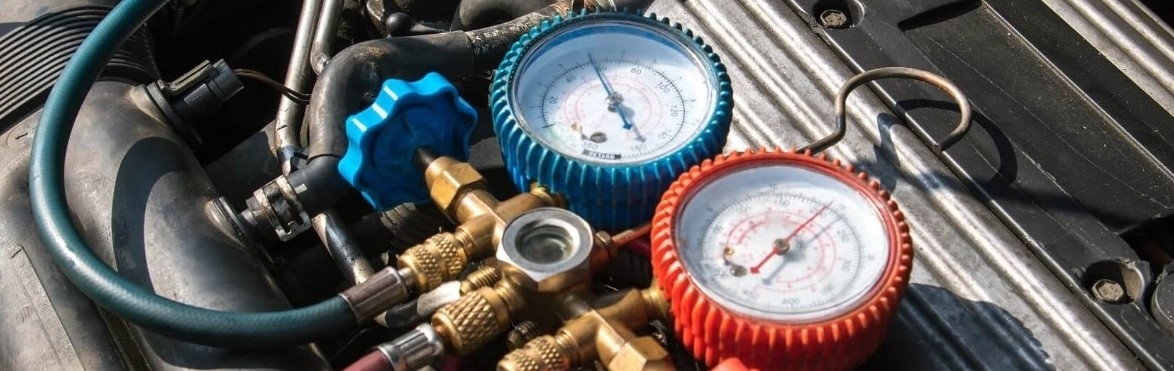
- Refrigerant pressures are read on both sides of the system to show whether refrigerant is missing or a component is restricting flow.
- Blower speed, filter condition and door travel are checked so an airflow fault is not blamed on the refrigerant side.
- You receive the findings and a written estimate before any part is ordered, and the work moves forward only once you approve it.
After the repair, the technician holds the loop under vacuum to prove it is sealed, then fills it to the weight listed for your vehicle. The defroster is tested again on a fogged or chilled windshield where conditions allow, and vent temperature is checked during a short drive.
Owners of all makes and models can book a climate visit with us, domestic or imported. When the schedule and parts allow, many blower and condenser jobs wrap up the same day, and any component that needs ordering is mentioned at check-in.
AC Service From Stokes Honda North Near North Charleston
The factory-trained technicians at Stokes Honda North know how climate hardware is laid out in the Pilot, Odyssey, Accord and Civic, along with the CR-V, HR-V, Passport and Ridgeline. Live climate data on Honda diagnostic software, plus direct command of the compressor, blower and mode doors, lets them test each part on its own. Larger models such as the Pilot and Odyssey may carry rear climate units with longer refrigerant lines, and refrigerant type and fill weight are matched to your VIN before the gauges go on.
The time your vehicle spends with us depends on what the diagnosis uncovers. Your advisor shares a realistic window once the cause is known and calls you if anything changes along the way.
- Genuine Honda condensers, blower motors and seals can be ordered when you want parts that match the original design.
- Readings from your visit are added to the service record, giving the next technician a baseline to compare against.
- If the system is healthy and the fog comes from a water leak, your advisor tells you that plainly and explains the next step.
Find Stokes Honda North in North Charleston, SC
AC Repair for Neighborhoods Near North Charleston
Highway miles on I-26 between Summerville and downtown put condensers in the path of gravel and tire debris from heavy truck traffic, and travelers heading to Charleston International Airport often find out on a rainy morning that the defroster has gone weak. Drivers across the region bring those vehicles to Stokes Honda North for a climate check before the next wet commute.
- Hanahan, SC
- Goose Creek, SC
- Ladson, SC
- Summerville, SC
- Mount Pleasant, SC
- Daniel Island, SC
- Lincolnville, SC
- Moncks Corner, SC
When the windshield refuses to clear, our technicians can find out why and restore your view of the road.
Before You Book: AC Repair Questions
The questions below come up often when drivers ask us about fogging, airflow and cooling.
Q: Why does my windshield fog up even with the heat turned all the way up?
Q: Is it normal for the AC compressor to run when I use the defroster?
Q: Where is the condenser, and why does it get damaged so often?
Q: Why is the airflow from my vents weak even on the highest fan speed?
Q: My vehicle is another make; can your team still handle its climate system?
Tell an advisor at our service desk whether the trouble is fog, weak airflow or warm air, and they can explain which checks fit your symptom.
A quick description of the symptom helps the technician start in the right place.
Get Your Air Conditioning on the Schedule
A defroster that clears slowly today may not clear at all on the next dark commute. Catching a condenser leak or a weak blower early keeps moisture out of the loop and the repair modest.
Each finding gets its own line and price on the estimate, letting you pick what to handle now. Nothing is replaced until you give the go-ahead.
Reserve a time on our website, ring the Stokes Honda North service desk or drop by to arrange a climate check. Clear glass and steady airflow make every drive easier.
Service Specials



Wild Card Savings

Four Wheel Alignment
Alignments are crucial to ensuring that you get the longest life out of your tires.
10% Off Brake Job

$25 Off Any Flush
Brake Flush Coolant Flush Transmission Flush Power steering flush Rear diff Fuel Injection Flush